Why Choose Livestock Medical Syringes for Global Buyers?
Why Choose Livestock Medical Syringes for Global Buyers? The question reaches beyond price, packaging, or shipment speed. A reliable syringe must deliver the intended dose accurately, remain comfortable in the handler’s hand, and function in dusty barns, open pasture, and refrigerated clinics. Small details matter. A stiff plunger can slow treatment. A poorly fitted needle can waste medicine.
FAO’s World Food and Agriculture Statistical Yearbook 2023 reports that livestock products provide about 33% of global dietary protein and 17% of calories. These figures show why dependable animal treatment supports both food security and farm resilience. The World Health Organization also notes that approximately 60% of emerging infectious diseases originate from animals. Therefore, safe injection practices deserve practical attention, not marketing decoration. Grand View Research’s veterinary syringes market analysis identifies livestock vaccination and therapeutic demand as important market drivers. Yet market growth alone does not prove product quality.
Dr. Juan Lubroth, former Chief Veterinary Officer at FAO, has described animal health as “a global public good.” That principle changes how global buyers should evaluate a Livestock Medical Syringe. They should examine dosage clarity, material compatibility, needle security, sterility controls, and documented quality systems. Field experience also matters. A syringe that performs well in a clean laboratory may disappoint beside a crowded cattle chute. The choice is not always elegant. Some buyers still compare only unit prices. That habit deserves reconsideration. A lower-cost syringe can create hidden losses through leakage, injury, inaccurate dosing, or repeated handling. Reliable sourcing requires evidence, traceability, and careful testing before large-scale adoption.
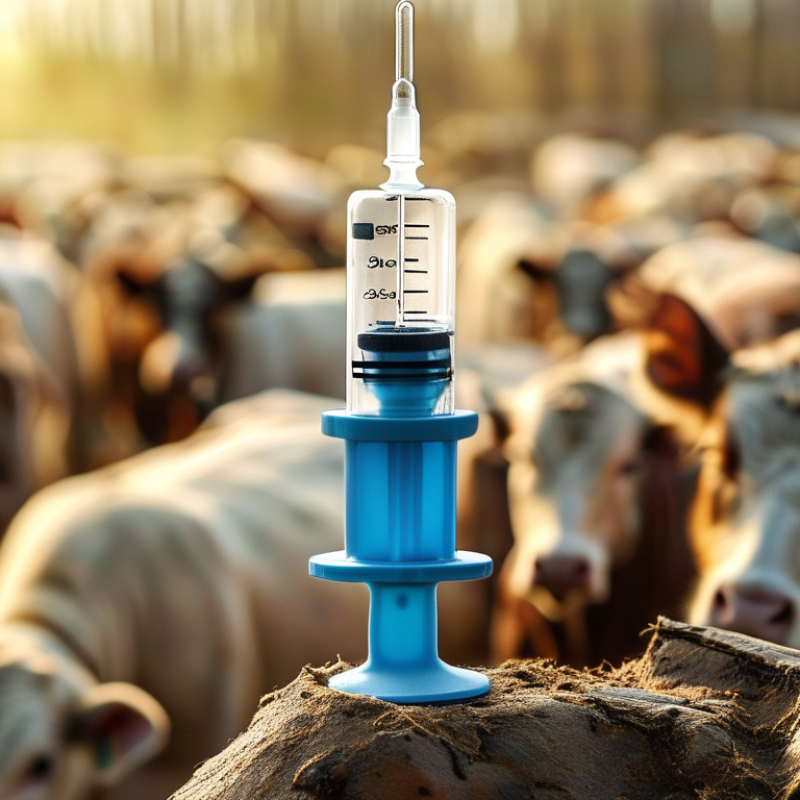
FAO Data: Livestock Supports 1.3 Billion Livelihoods Worldwide
Livestock supports approximately 1.3 billion livelihoods worldwide, according to the Food and Agriculture Organization (FAO). These livelihoods include smallholder farms, animal-health workers, transporters, and local food businesses. Reliable livestock medical syringes help protect this network through accurate vaccination and treatment. Every measured dose matters. Too little may reduce protection. Too much can increase waste and animal stress.
The OECD-FAO Agricultural Outlook 2024–2033 projects global meat production to increase by about 12% during the period. That growth will require more consistent herd-health routines, especially in regions with limited veterinary access. Practical syringe features matter: clear graduations, smooth plungers, secure needle connections, and materials suited to repeated farm use. The World Organisation for Animal Health emphasizes prevention, surveillance, and responsible veterinary medicine use. Syringes support these principles when trained professionals follow approved protocols.
Global buyers should also review sterilization methods, packaging integrity, traceability, and compatibility with local regulations. Field conditions are rarely perfect. Dust, heat, and hurried handling can affect performance. A syringe that looks economical may create higher costs through dosing errors or discarded equipment. This is easy to overlook. Selection should balance price, animal welfare, operator safety, and dependable delivery. No syringe replaces veterinary judgment, but the right design can make that judgment easier to apply consistently.
WOAH Standards: Sterility and Traceability in Veterinary Syringes
Why Choose Livestock Medical Syringes for Global Buyers?
For global livestock buyers, syringe quality affects treatment accuracy, animal welfare, and farm biosecurity. Veterinary syringes should support WOAH principles on responsible animal health management, even though WOAH does not approve individual syringe brands.
Sterility begins with sealed packaging, controlled manufacturing, and a clearly stated expiry date. A damaged pouch is not a minor concern. It can expose equipment to dust, moisture, or microorganisms.
Traceability is equally important. Each shipment should include lot numbers, production dates, sterilization records, and reliable supplier documentation. These details help farms investigate adverse events and manage recalls quickly.
They also support veterinary audits across different markets. In practice, paperwork is sometimes overlooked. That is a weak point. A clean-looking syringe cannot prove its history. Buyers should also check needle compatibility, graduations, plunger movement, and packaging consistency before large-scale purchasing.
Tips: Request sterilization evidence and sample units before ordering. Inspect seals under bright light. Store cartons in a dry, temperature-controlled area. Record lot numbers during vaccination or treatment. Train workers to use one sterile syringe per animal when disease-control procedures require it. Small errors can spread quickly across crowded housing, so practical checks matter.
Selecting Syringes by Species, Dose Accuracy, Gauge, and Capacity
Choosing livestock medical syringes starts with the animal, not the carton. Cattle, sheep, goats, pigs, and poultry differ in body size, skin thickness, and treatment volume. A syringe suited to a calf may be awkward for an adult cow. Small details matter. Match the device to the species, handling method, and expected number of animals. Repeated use also demands a comfortable grip and clear graduations.
Dose accuracy matters when medicine is costly or the margin is narrow. Select a barrel that keeps the measured dose near its middle range. A 3 mL syringe can offer better control for small doses than a 20 mL model. Yet capacity alone does not guarantee precision. Check readable markings, smooth plunger movement, and compatibility with the prescribed solution. A common field mistake is choosing the largest syringe for speed. It can make small measurements harder to see.
Gauge and needle length should reflect species, tissue, route, and solution thickness, following veterinary directions. Thinner needles may reduce tissue damage, but thick fluids may require a wider bore. Longer is not always better. Needle stability matters during movement. For global buyers, lot traceability, sealed packaging, and clear instructions support dependable purchasing. Perfect choices are rare. That is worth admitting. Review the species, dose, gauge, capacity, route, and handling conditions before each procurement decision.
Global Buyers: ISO 13485, CE Marking, and Batch Compliance
Livestock medical syringes demand more than a sharp needle and a clean barrel. FAO reports that livestock supports about 1.3 billion livelihoods worldwide. Reliable equipment therefore affects farms, veterinarians, and food supply chains. ISO 13485 certification shows that a manufacturer operates a medical-device quality system. It covers design controls, risk management, production, and corrective actions.
CE marking matters for products entering applicable European markets. It indicates conformity with relevant EU requirements, not automatic product perfection. Buyers should check the declaration of conformity, technical documentation, and intended use.
WOAH reports that 60% of human infectious diseases are zoonotic, while 75% of emerging pathogens originate in animals. Manufacturing discipline is not decorative. It supports safer handling and more consistent dosing.
Batch compliance makes each shipment easier to verify. Request the lot number, sterilization method, production date, expiry date, and inspection records. These details should match the carton and individual packaging. A practical receiving check includes seal condition, scale markings, needle attachment, and sample testing.
ISO’s 2023 Survey shows ISO 13485 certification is established across thousands of sites worldwide, but certification alone cannot replace inspection. A low price still tempts buyers. That choice can age badly. Some procurement teams also overlook local registration rules, creating avoidable delays.
The better question is not only “Is it certified?” but “Can every batch be traced, checked, and defended?”

